 Welcome Sathish Gastro & Liver Hospital In Mancherial


GERD Symptoms, Causes, and the Best Treatments for Acid Reflux
A comprehensive guide to understanding Gastroesophageal Reflux Disease — what triggers it, how it feels, and the most effective treatments available today.
If you've ever felt a burning sensation rising from your stomach into your chest or throat after a meal, you're not alone. Acid reflux is one of the most common digestive complaints worldwide — and when it happens regularly, it becomes a chronic condition known as GERD (Gastroesophageal Reflux Disease).
At Sathish Gastro & Liver Hospital, Mancherial, we see patients with GERD every day. In this guide, Dr. Sathish Chander Gadigoppula — a specialist in Medical Gastroenterology, Liver, Pancreas & IBD — walks you through everything you need to know: the symptoms, causes, and the most effective treatment options available.

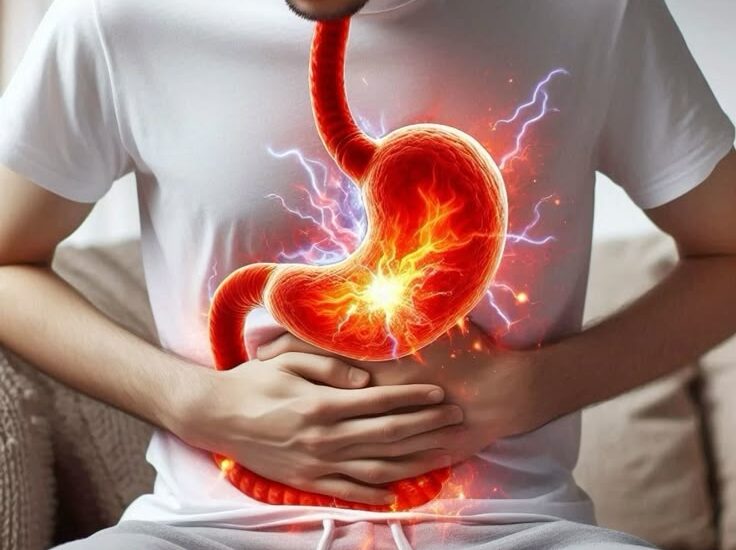
Acid reflux causes sharp, burning discomfort in the stomach and chest area.
What is GERD? Understanding Acid Reflux
Gastroesophageal Reflux Disease (GERD) occurs when stomach acid repeatedly flows back into the esophagus — the tube connecting your mouth to your stomach. This backwash of acid irritates the lining of the esophagus, causing inflammation, discomfort, and in severe cases, long-term damage.
Occasional acid reflux is normal. However, if you experience it more than twice a week, you may have GERD — a condition that requires medical attention and proper management.
💡 Did you know? GERD affects approximately 20–30% of the Western population and is increasingly common in South Asia due to dietary habits and lifestyle changes.
Common Symptoms of GERD & Acid Reflux
GERD presents with a range of symptoms that can vary in severity. Some are classic digestive signs, while others may surprise you:

A burning sensation rising through the throat is one of the hallmark symptoms of acid reflux and GERD.
What Causes GERD? Key Risk Factors
GERD occurs when the lower esophageal sphincter (LES) — a muscular ring that acts as a valve between the esophagus and stomach — weakens or relaxes inappropriately, allowing stomach acid to escape upward.
| Category | Trigger / Cause | Impact Level |
|---|---|---|
| Diet | Spicy, fatty, fried, or acidic foods | High |
| Diet | Caffeine, alcohol, carbonated drinks | High |
| Diet | Chocolate and mint | Moderate |
| Lifestyle | Obesity / excess abdominal weight | High |
| Lifestyle | Smoking & tobacco use | High |
| Lifestyle | Eating large meals or lying down after eating | High |
| Lifestyle | Wearing tight clothing around abdomen | Moderate |
| Medical | Hiatal hernia | High |
| Medical | Pregnancy | Moderate |
| Medical | Delayed stomach emptying (gastroparesis) | Moderate |
| Medications | NSAIDs, aspirin, calcium channel blockers | Moderate |
| Genetics | Family history of GERD or esophageal issues | Moderate |
How is GERD Diagnosed?
At Sathish Gastro & Liver Hospital, we use a comprehensive approach to diagnose GERD accurately. Your doctor may recommend one or more of the following:
| Diagnostic Method | What It Detects | Invasive? |
|---|---|---|
| Upper Endoscopy (EGD) | Esophageal inflammation, ulcers, Barrett's esophagus | Minimally |
| 24-Hour pH Monitoring | Measures acid levels in esophagus over time | Minimally |
| Esophageal Manometry | Evaluates lower esophageal sphincter pressure | Minimally |
| Barium Swallow X-Ray | Visualizes esophagus and stomach function | No |
| Clinical Evaluation | Symptom assessment and response to trial treatment | No |

A gastroenterologist uses anatomical models to explain how acid reflux and GERD affect the stomach and esophagus.
Best Treatments for GERD & Acid Reflux
The good news is that GERD is highly manageable with the right combination of lifestyle changes, medications, and in some cases, minimally invasive procedures.
1. Lifestyle Modifications (First Line of Defence)
- Avoid trigger foods — spicy, fatty, acidic foods, and caffeine
- Eat smaller, more frequent meals instead of large portions
- Do not lie down for at least 2–3 hours after eating
- Elevate the head of your bed by 15–20 cm
- Maintain a healthy body weight — even 5–10% weight loss can significantly reduce symptoms
- Quit smoking and reduce or eliminate alcohol intake
- Wear loose-fitting clothing around the abdomen
- Eat dinner at least 3 hours before bedtime
2. Medications for GERD
| Medication Type | How It Works | Examples |
|---|---|---|
| Antacids | Neutralize stomach acid quickly | Gelusil, Digene, ENO |
| H2 Blockers | Reduce acid production | Ranitidine, Famotidine |
| Proton Pump Inhibitors (PPIs) | Block acid secretion — most effective | Omeprazole, Pantoprazole, Rabeprazole |
| Prokinetics | Speed up stomach emptying | Domperidone, Metoclopramide |
| Baclofen | Reduces LES relaxations | Baclofen (prescription only) |
⚠️ Important: Never self-medicate for GERD long-term. Overuse of antacids or PPIs without medical supervision can mask serious conditions like Barrett's esophagus or esophageal cancer. Always consult a gastroenterologist.
3. Surgical & Advanced Procedures
- Laparoscopic Nissen Fundoplication — Gold standard surgery where the top of the stomach wraps around the LES to strengthen it
- LINX Device — A ring of magnetic beads placed around the LES to keep it closed
- Endoscopic Fundoplication (TIF) — Minimally invasive endoscopic procedure with no external incisions
- Bariatric Surgery — Recommended for GERD patients who are obese
GERD vs Normal Acid Reflux: Key Differences
| Feature | Normal Acid Reflux | GERD |
|---|---|---|
| Frequency | Occasional (once a week or less) | 2+ times per week |
| Duration | Short-lived (minutes to an hour) | Chronic and persistent |
| Esophageal damage | Unlikely | Possible (esophagitis, Barrett's) |
| Impact on life | Mild inconvenience | Significant quality-of-life impact |
| Requires medical care | Usually not | Yes — specialist evaluation needed |
| Risk of complications | Very low | Higher — including esophageal cancer risk |
Complications of Untreated GERD
- Esophagitis — Inflammation and erosion of the esophageal lining
- Barrett's Esophagus — A precancerous change in esophageal cells
- Esophageal Stricture — Narrowing of the esophagus due to scar tissue
- Esophageal Adenocarcinoma — A rare but serious cancer linked to long-standing GERD
- Respiratory Issues — Chronic cough, asthma, laryngitis due to acid reaching the airways
Frequently Asked Questions (FAQs)
Don't Let GERD Control Your Life
Our expert gastroenterologist Dr. Sathish Chander Gadigoppula at Sathish Gastro & Liver Hospital, Mancherial is here to provide accurate diagnosis and personalised GERD treatment plans.
📞 Call: +91 99082 47108 Book Appointment