 Welcome Sathish Gastro & Liver Hospital In Mancherial


Alcoholic Liver Problems —
Causes, Symptoms, Stages & Treatment
Alcoholic liver problems are one of the most serious and preventable causes of liver damage worldwide. If you or a loved one is at risk, understanding the early signs and seeking expert care promptly can make all the difference.
In today's world, alcoholic liver problems are becoming increasingly common — and unfortunately, increasingly severe. The liver is one of the most vital organs in the human body, responsible for filtering toxins, producing essential proteins, and aiding digestion. However, when it is regularly exposed to large amounts of alcohol, it becomes progressively damaged, leading to a range of serious conditions collectively known as alcoholic liver disease (ALD).
Importantly, alcoholic liver problems do not develop overnight. Instead, they progress through distinct stages over time — each one more dangerous than the last. Furthermore, many people are unaware that damage is occurring because the early stages of the disease often present with very few noticeable symptoms. As a result, by the time someone seeks medical help, the condition may already be in an advanced stage.
That is precisely why early diagnosis and expert medical care are so critical. At Sathish Gastro & Liver Hospital in Mancherial, Dr. Sathish Chander Gadigoppula — a super-specialist with over 15 years of experience in gastroenterology and liver care — provides comprehensive evaluation and advanced treatment for all stages of alcoholic liver problems.
In this article, we will therefore take a thorough look at what alcoholic liver problems are, how they develop, what symptoms to watch for, and what treatment options are available. Additionally, we will show you why Sathish Gastro & Liver Hospital is Mancherial's most trusted destination for liver care.

What Are Alcoholic Liver Problems? A Clear Overview
Alcoholic liver problems refer to a spectrum of liver injuries that are directly caused by excessive and prolonged alcohol consumption. Alcohol is metabolised primarily in the liver, and while the liver can process small amounts safely, heavy drinking overwhelms this capacity. As a consequence, toxic byproducts build up, triggering inflammation, fat accumulation, and eventually scarring of the liver tissue.
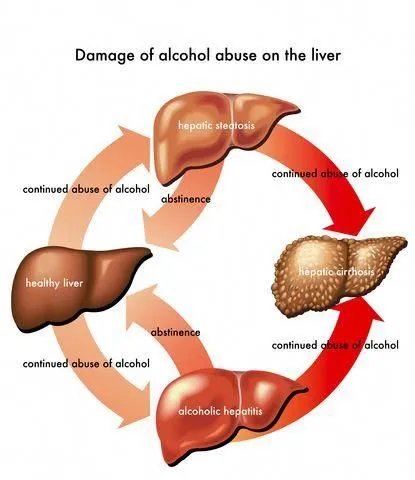
Moreover, it is important to understand that alcoholic liver disease is not a single condition. Rather, it encompasses three overlapping and progressive disorders — each building upon the damage caused by the previous one.
"Alcoholic liver disease is entirely preventable. Nevertheless, once it progresses to cirrhosis, the damage becomes permanent. Therefore, the most effective strategy is early intervention — before irreversible scarring occurs." — Dr. Sathish Chander Gadigoppula, Sathish Gastro & Liver Hospital, Mancherial
The Three Progressive Stages of Alcoholic Liver Problems
Alcoholic Fatty Liver Disease (Steatosis)
This is the earliest and most reversible stage of alcoholic liver problems. Fat deposits accumulate in liver cells after even short periods of heavy drinking. Although the liver may be enlarged, most people experience no symptoms at this stage. Crucially, however, if alcohol consumption stops completely, the liver can recover fully within a few weeks.
Alcoholic Hepatitis
If drinking continues, the fatty liver progresses to alcoholic hepatitis — a state of significant inflammation of the liver. At this stage, symptoms become much more apparent and can range from mild discomfort to life-threatening illness. Jaundice, abdominal pain, fever, and nausea are common signs. Furthermore, in severe cases, alcoholic hepatitis can lead to acute liver failure, which is a medical emergency.
Alcoholic Cirrhosis
Cirrhosis represents the most advanced and unfortunately irreversible stage of alcoholic liver problems. At this point, the normal liver tissue is replaced by permanent scar tissue (fibrosis), severely impairing liver function. As a result, complications such as portal hypertension, internal bleeding, kidney failure, and hepatic encephalopathy can arise.

What Causes Alcoholic Liver Problems? Key Risk Factors
While alcohol consumption is obviously the primary cause of alcoholic liver problems, several additional factors can significantly influence whether — and how quickly — a person develops the disease. Understanding these risk factors is therefore important for prevention and early intervention.
Heavy & Prolonged Drinking
Consistently drinking above safe limits over many years is the leading cause of all stages of alcoholic liver damage.
Genetic Predisposition
Individuals with a family history of liver disease or alcoholism have a higher genetic susceptibility to liver damage from alcohol.
Gender
Women are more vulnerable to alcoholic liver problems than men, as they metabolise alcohol differently and tend to develop liver damage with lower alcohol intake.
Pre-existing Liver Conditions
People with hepatitis B or C infections, fatty liver, or other pre-existing liver conditions face a much greater risk of developing serious alcoholic liver disease.
Poor Nutrition
Heavy drinkers often suffer from malnutrition — a condition that worsens liver damage significantly and accelerates disease progression.
Obesity
Being overweight adds additional stress to the liver and substantially increases the risk of progressing from fatty liver to hepatitis or cirrhosis.
Recognising the Symptoms of Alcoholic Liver Problems
One of the most dangerous aspects of alcoholic liver problems is that they are often silent in the early stages. Nevertheless, as the disease advances, a range of warning signs begins to appear. Consequently, being aware of these symptoms and seeking medical attention promptly can significantly improve outcomes.
Early-Stage Symptoms (Fatty Liver)
Fatigue & Weakness
Persistent tiredness even after adequate rest is often one of the first signs of early liver stress.
Mild Nausea
An unsettled stomach, particularly after meals or in the morning, can indicate early liver dysfunction.
Discomfort in Upper Right Abdomen
A dull ache or sense of fullness on the right side below the ribcage, where the liver is located.
Moderate to Advanced-Stage Symptoms (Hepatitis & Cirrhosis)
Jaundice
Yellowing of the skin and whites of the eyes — a classic sign that the liver is no longer processing bilirubin effectively.
Abdominal Swelling (Ascites)
Fluid accumulation in the abdomen, causing a visibly distended belly, is a serious sign of advanced alcoholic liver disease.
Dark Urine & Pale Stools
Changes in urine and stool colour are direct indicators of impaired bile and bilirubin processing in the liver.
Confusion & Memory Problems
When toxins build up in the blood due to liver failure, they can affect brain function, causing hepatic encephalopathy.
Easy Bruising & Bleeding
The liver produces clotting factors; therefore, when it fails, patients bruise easily and wounds bleed longer than normal.
Fever & Rapid Heartbeat
Signs of alcoholic hepatitis — indicating active inflammation and a need for urgent medical attention.
Seek Immediate Medical Attention
If you notice jaundice, sudden abdominal swelling, confusion, or vomiting blood — these are signs of a medical emergency. Please contact Sathish Gastro & Liver Hospital, Mancherial immediately at +91 99082 47108 or visit us without delay.
How Are Alcoholic Liver Problems Diagnosed?
Accurate and early diagnosis is absolutely fundamental to managing alcoholic liver problems effectively. At Sathish Gastro & Liver Hospital, Mancherial, Dr. Sathish uses a systematic, multi-step diagnostic approach to assess the extent of liver damage and determine the most appropriate treatment plan for each patient.
Blood Tests (LFT)
Liver function tests measure enzyme levels (AST, ALT, GGT) to detect inflammation, damage, and impaired liver function. Elevated GGT is particularly characteristic of alcohol-related liver injury.
Ultrasound Imaging
An abdominal ultrasound is often the first imaging tool used. It effectively detects fatty changes, liver enlargement, fluid accumulation, and structural abnormalities in the liver.
FibroScan / Elastography
This non-invasive test measures liver stiffness — a reliable indicator of the degree of fibrosis or cirrhosis present without the need for a painful liver biopsy.
CT Scan or MRI
Advanced imaging provides detailed views of liver structure, helping to detect cirrhosis, tumours, or complications such as portal hypertension.
Endoscopy
An upper GI endoscopy is used to check for oesophageal varices — enlarged veins in the food pipe that can rupture and bleed dangerously in patients with advanced liver disease.
Liver Biopsy
In select cases, a small sample of liver tissue is taken and examined under a microscope to confirm the type and severity of liver damage.

Treatment for Alcoholic Liver Problems at Sathish Gastro, Mancherial
The good news is that, when detected early enough, alcoholic liver problems are very much treatable — and in the earliest stages, entirely reversible. At Sathish Gastro & Liver Hospital, Mancherial, we offer a comprehensive, evidence-based treatment approach personalised to each patient's specific stage and clinical condition.
🚫 1. Complete Alcohol Abstinence
Stopping alcohol consumption entirely is, without question, the single most important step in treating any stage of alcoholic liver disease. Research consistently shows that the liver has a remarkable ability to heal itself — particularly in the fatty liver and early hepatitis stages — once alcohol is completely removed.
💊 2. Medications & Nutritional Support
Depending on the severity of the condition, Dr. Sathish may prescribe medications to reduce liver inflammation (such as corticosteroids for severe alcoholic hepatitis), manage complications, and support liver cell regeneration. Furthermore, nutritional therapy — including vitamin supplementation (particularly thiamine/B1) — plays a vital role in recovery.
🩺 3. Management of Complications
In advanced cases, managing the complications of cirrhosis becomes a primary focus. This includes diuretic therapy for ascites, beta-blockers or endoscopic band ligation for oesophageal varices, and lactulose therapy for hepatic encephalopathy. Our team provides comprehensive management of all these complications under one roof.
🔬 4. Regular Monitoring & Follow-Up
Patients with alcoholic liver problems require ongoing monitoring to track disease progression, assess treatment response, and detect complications early. Dr. Sathish and his team schedule regular follow-up visits including repeat blood tests, ultrasounds, and endoscopy as required.
🏥 5. Liver Transplantation Referral
In cases of end-stage cirrhosis where conservative treatments are no longer sufficient, liver transplantation becomes the definitive treatment option. We work closely with leading transplant centres and provide thorough pre-transplant evaluation, counselling, and ongoing follow-up care.
"At Sathish Gastro & Liver Hospital, we do not just treat the disease — we treat the whole person. Our patient-first approach means that we address not only the medical aspects of alcoholic liver problems, but also the nutritional, psychological, and lifestyle factors that play a critical role in recovery." — Dr. Sathish Chander Gadigoppula
Preventing Alcoholic Liver Problems — Lifestyle Changes That Matter
Prevention is always better than cure — and this is especially true for alcoholic liver problems. Fortunately, because this disease is directly caused by lifestyle choices, it is also entirely preventable in most cases.
Limit or Stop Alcohol
Staying within safe alcohol limits — or quitting entirely — is the single most effective way to prevent alcoholic liver disease.
Eat a Balanced Diet
A nutritious, liver-friendly diet rich in fruits, vegetables, whole grains, and lean proteins supports liver health and repair.
Stay Physically Active
Regular exercise helps maintain a healthy weight, reduce liver fat, and improve overall metabolic health.
Stay Well Hydrated
Drinking plenty of water helps the liver efficiently flush out toxins and supports all its metabolic functions.
Regular Liver Check-Ups
Annual blood tests and liver function screenings help detect early damage — even before symptoms appear.
Avoid Self-Medication
Combining alcohol with painkillers or certain medications dramatically worsens liver damage. Always consult a doctor.
Expert Liver Care in Mancherial
Sathish Gastro & Liver Hospital
Led by Dr. Sathish Chander Gadigoppula — trained at AIG Hyderabad — our hospital is Mancherial's most trusted destination for advanced gastro and liver care. Whether you are dealing with early-stage fatty liver or complex cirrhosis, we are here to help.
Frequently Asked Questions About Alcoholic Liver Problems
-
Can alcoholic liver problems be reversed?
Yes — in the early stage (fatty liver), the damage is entirely reversible if alcohol consumption is stopped completely and the right nutritional and medical support is provided. Alcoholic hepatitis can also improve significantly with treatment. However, once cirrhosis develops, the liver scarring is permanent and cannot be reversed, though progression can still be slowed considerably. -
How much alcohol is needed to cause liver damage?
There is no completely "safe" level of alcohol, as susceptibility varies between individuals. However, consistent heavy drinking — defined as more than 14 units per week for men and 7 units per week for women — significantly increases the risk of developing alcoholic liver problems. Binge drinking patterns are particularly harmful to liver health. -
What tests are done at Sathish Gastro to diagnose liver problems?
At Sathish Gastro & Liver Hospital in Mancherial, Dr. Sathish uses a comprehensive diagnostic approach including liver function blood tests (LFT), abdominal ultrasound, FibroScan elastography, CT/MRI imaging, and advanced endoscopy. Each patient's diagnostic plan is personalised based on symptoms and clinical presentation. -
Is jaundice always a sign of serious liver disease?
Not always — jaundice can occur due to various causes. However, in the context of regular alcohol consumption, jaundice is a significant warning sign that should never be ignored. It indicates that the liver is struggling to process bilirubin effectively, which often points to alcoholic hepatitis or more advanced liver disease requiring urgent evaluation. -
How do I book an appointment at Sathish Gastro, Mancherial?
Booking an appointment is simple. You can call us directly at +91 99082 47108, send an email to info@sathishgastroliver.com, or fill out our online contact form. Our hospital is open every day from 9:00 AM to 9:00 PM. We are located at Bellampalli Chowrasta, beside Raghavarao Hospital, Bus Stand Road, Mancherial – 504208.
Conclusion — Take Charge of Your Liver Health Today
In summary, alcoholic liver problems are a serious but largely preventable group of conditions that can have life-threatening consequences if left untreated. From the early reversible stage of fatty liver all the way through to irreversible cirrhosis, the progression of this disease underscores why early action is so essential.
Fortunately, with expert medical care, complete abstinence from alcohol, and proper nutritional support, many patients can achieve meaningful recovery — especially when treatment begins early. Moreover, the right specialist makes all the difference.
At Sathish Gastro & Liver Hospital in Mancherial, Dr. Sathish Chander Gadigoppula brings the highest level of gastroenterology and liver expertise to the people of Mancherial and the surrounding region. Whether you are concerned about your own liver health or that of a loved one, do not delay. Instead, reach out to our team today and take the first step towards better liver health and a brighter future.
Concerned About Alcoholic Liver Problems?
Don't wait for symptoms to worsen. Consult Dr. Sathish Chander Gadigoppula — Mancherial's leading gastro and liver specialist — today.