 Welcome Sathish Gastro & Liver Hospital In Mancherial


Gas Tablet Usage: Benefits, Dosage
& Safe Use for Fast Relief
A comprehensive, doctor-reviewed guide to understanding gas relief tablets — what they do, how to use them safely, and when professional care is needed.
Gas and bloating are among the most common digestive complaints encountered in clinical practice. While most episodes are short-lived and harmless, the discomfort can significantly disrupt daily life. Gas tablets — including antacids, simethicone tablets, activated charcoal, and pre+probiotic formulations — offer fast, targeted relief when used correctly.
This guide explains the science behind gas tablets, the correct dosage for different formulations, potential side effects, and — critically — the warning signs that mean you should see a gastroenterologist rather than reaching for an over-the-counter remedy.

What Are Gas Tablets?
Gas tablets are oral medications designed to relieve symptoms associated with excess intestinal gas, bloating, belching, and indigestion. They work through several different mechanisms depending on their active ingredient.
When Should You Use a Gas Tablet?
Gas tablets are appropriate for occasional, mild-to-moderate symptoms. Typical situations include post-meal bloating, excess belching after eating gas-producing foods, mild heartburn, temporary indigestion during travel, or discomfort after carbonated beverages.

⚠️ Important: Gas tablets treat symptoms, not underlying conditions. If you experience severe or persistent abdominal pain, blood in stools, unexplained weight loss, or symptoms lasting more than two weeks, consult a gastroenterologist immediately rather than self-medicating.
How to Take Gas Tablets Correctly
Chewable Tablets
Chew thoroughly before swallowing. Do not swallow whole — chewing activates the antacid compounds and ensures they mix with saliva to begin working faster. Chewable antacids are typically taken 30–60 minutes after meals or at the first sign of discomfort.
Effervescent / Dissolving Tablets

Drop the tablet into a full glass of water (approximately 200–250 ml) and wait until fizzing completely stops before drinking. This delivery method is faster-acting than chewable forms because the active ingredients are already dissolved when they reach the stomach.
Dosage Guide by Tablet Type
| Tablet Type | Active Ingredient | Typical Adult Dose | Timing | Max / Day | Safety |
|---|---|---|---|---|---|
| Antacid (Chewable) | Calcium Carbonate / Magnesium Hydroxide | 1–2 tablets | 30–60 min after meals | 10–12 tablets | Generally Safe |
| Simethicone | Simethicone 40–125 mg | 1–2 tablets | After meals & bedtime | 4 doses | Very Safe |
| Effervescent | Sodium Bicarbonate + Citric Acid | 1 tablet in 200 ml water | As needed, not with meals | 3 tablets | Caution: High Sodium |
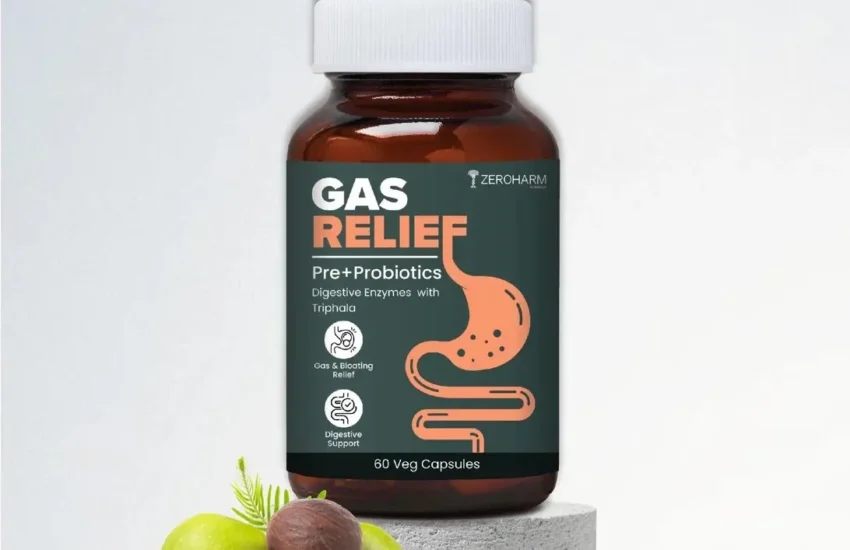
| Pre + Probiotic Capsule | Lactobacillus + Prebiotics + Enzymes | 1–2 capsules | With meals (morning preferred) | 2 capsules | Generally Safe |
| Herbal / Triphala | Amalaki, Bibhitaki, Haritaki | 1–2 capsules (500 mg) | After dinner or as directed | 2–3 capsules | Generally Safe |
| Activated Charcoal | Activated Charcoal 250–500 mg | 1–2 capsules | 2 hrs before/after other meds | As directed | Caution: Drug Absorption |
| H2 Blocker Tablet | Famotidine 10–20 mg | 10–20 mg | 30 min before meals / bedtime | 2 doses | Consult Doctor |
Dosages above are general guidelines for adults only. Children, pregnant women, and those with kidney or heart conditions require medical supervision before use.
Pre + Probiotic Gas Relief Supplements
A newer category of gas relief products combines pre-biotics, probiotics, and digestive enzymes to address not just the immediate symptom but also the underlying gut imbalance that causes chronic gas and bloating.

| Ingredient | Role in Gas Relief | Onset of Action |
|---|---|---|
| Probiotics (Lactobacillus spp.) | Restore healthy gut bacteria, reduce gas-producing bacteria | 2–4 weeks (cumulative) |
| Prebiotics (FOS/Inulin) | Feed beneficial bacteria to help them thrive | 2–4 weeks (cumulative) |
| Digestive Enzymes (Amylase, Lipase, Protease) | Break down food more completely, reducing fermentation | 30–60 minutes |
| Triphala (Ayurvedic blend) | Carminative, supports bowel motility, reduces bloating | Hours to days |
Key Benefits of Gas Tablets When Used Correctly
Possible Side Effects & Precautions
| Tablet Type | Possible Side Effects | Who Should Avoid |
|---|---|---|
| Calcium-based Antacids | Constipation, milk-alkali syndrome (overuse), kidney stones | Kidney disease patients, those on calcium supplements |
| Magnesium-based Antacids | Diarrhoea, loose stools | Kidney impairment; avoid high doses in pregnancy |
| Sodium Bicarbonate | Sodium overload, acid rebound, bloating worsening | Hypertension, heart failure, low-sodium diets |
| Simethicone | Very rare — minimal systemic absorption | No major contraindications; safe in pregnancy |
| Activated Charcoal | Black stools, constipation, drug interactions | Take 2 hrs away from all other medications |
| Probiotics | Temporary increase in gas initially (resolves in 1–2 weeks) | Immunocompromised patients — consult doctor first |
Doctor's Note: Never take antacids within 2 hours of other prescription medications as they can significantly reduce drug absorption. Always disclose antacid use to your treating physician, especially if you are on heart medications, thyroid drugs, or antibiotics.
When Gas Tablets Are Not Enough: See a Gastroenterologist
Self-medication with gas tablets is appropriate only for occasional, mild symptoms. The following warning signs indicate an underlying condition that requires professional evaluation:
- Persistent bloating lasting more than 2 weeks despite medication
- Blood in stools or black, tarry stools
- Unintentional weight loss of more than 2–3 kg in a month
- Severe abdominal pain or pain that wakes you from sleep
- Difficulty swallowing or a feeling of food being stuck
- Vomiting that is persistent or contains blood
- Jaundice (yellowing of skin or eyes) combined with abdominal discomfort
- Frequent diarrhoea or constipation alternating with gas
Dietary Tips to Reduce Gas Naturally
| Avoid or Limit | Prefer Instead |
|---|---|
| Carbonated drinks (soda, sparkling water) | Plain water, warm herbal teas (fennel, ginger, mint) |
| Beans, lentils, chickpeas (large quantities) | Soaked and well-cooked legumes in small amounts |
| Cruciferous vegetables (raw cabbage, cauliflower) | Cooked versions — reduces gas-forming fibres |
| Dairy (if lactose intolerant) | Lactase enzyme tablets before meals, lactose-free milk |
| Fried, fatty foods | Grilled, steamed, or baked alternatives |
| Eating quickly or talking while eating | Eat slowly, chew 20–30 times per mouthful |
| Chewing gum and hard candies | Avoid between meals; use mint tea instead |
Occasional daily use of simethicone is generally considered safe. However, taking antacids every day for more than two weeks without medical review is not advisable. Daily antacid dependence may mask an underlying condition like GERD or peptic ulcer disease. Consult a gastroenterologist if you need gas tablets every day.
Simethicone is generally considered safe during pregnancy and is not absorbed into the bloodstream. Calcium carbonate antacids are also typically considered safe. However, sodium bicarbonate-based antacids should be avoided due to sodium overload risk. Always consult your obstetrician before taking any medication during pregnancy.
Effervescent (dissolving) antacid tablets dissolved in water typically act fastest — often within 5–10 minutes — because the active ingredients are already in solution. Chewable antacids work next-fastest (10–20 minutes). Probiotic and enzyme capsules are not designed for immediate relief; they work over days and weeks.
Simethicone drops are commonly used for infant colic and are considered safe for babies. However, antacid tablets, activated charcoal, and probiotic capsules all have different safety profiles for children. Never give an adult gas tablet to a child without guidance from a paediatrician.
Recurring bloating despite gas tablets suggests an underlying cause the medication is not addressing. Common culprits include lactose intolerance, IBS, SIBO, gluten sensitivity, or a motility disorder. A gastroenterologist can evaluate you with a breath test, food diary review, or endoscopy to identify the root cause.
Yes, antacids can interfere with the absorption of antibiotics, thyroid medications, iron supplements, and heart medications. As a rule, antacids should be taken at least 2 hours before or after other medications. Activated charcoal can bind to nearly all drugs and should be timed carefully. Always inform your doctor about antacid use.
Antacids chemically neutralise excess stomach acid, providing relief from heartburn and acid indigestion. Simethicone does not affect acid — it is an anti-foaming agent that physically breaks up gas bubbles in the stomach and intestines, allowing trapped gas to be expelled more easily. Many combination products contain both.
See a gastroenterologist if gas or bloating persists for more than two weeks, is accompanied by pain, blood in stools, weight loss, difficulty swallowing, or vomiting; if symptoms disrupt sleep or daily activities; or if you need gas tablets every day. These signal a professional evaluation — including endoscopy — is needed to rule out underlying digestive conditions.
Persistent Gas or Bloating? Don't Self-Medicate Indefinitely.
Dr. Sathish Chander Gadigoppula — DrNB Gastroenterologist with 15+ years of experience — is available at Sathish Gastro & Liver Hospital, Mancherial for expert evaluation and personalised treatment.
Book an Appointment 📞 +91 99082 47108