 Welcome Sathish Gastro & Liver Hospital In Mancherial


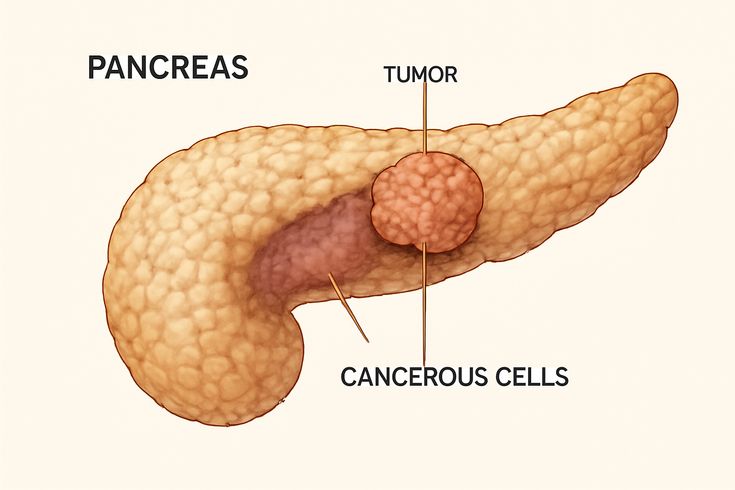

What Is Pancreatic Cancer?
Pancreatic cancer occurs when cells in the pancreas grow abnormally and form a malignant tumour. The most common type — accounting for about 90% of cases — is pancreatic ductal adenocarcinoma (PDAC), which starts in the cells lining the pancreatic duct.
The pancreas has two main functions: exocrine (producing digestive juices) and endocrine (secreting hormones like insulin and glucagon). Tumours can develop in either part, though exocrine tumours are far more common.
🔬 Pancreatic Cancer — Key Facts at a Glance
Early Warning Signs & Symptoms of Pancreatic Cancer
Pancreatic cancer is often called a "silent disease" because early symptoms are vague and easy to miss. Knowing these signs can help you seek timely medical help:
- Jaundice — Yellowing of the skin and eyes; often the first noticeable sign, especially with tumours in the head of the pancreas.
- Unexplained weight loss — Losing weight without trying, often rapidly.
- Upper abdominal or back pain — A dull, persistent ache that may worsen when lying down and ease when leaning forward.
- Nausea and vomiting — Especially after eating.
- New-onset diabetes — Sudden development of diabetes in people with no prior risk can be a warning sign.
- Loss of appetite — Persistent lack of interest in food.
- Dark urine and pale stools — Caused by bile duct blockage.
- Extreme fatigue — Feeling persistently tired even with rest.
- Blood clots (DVT) — Some patients develop unexplained blood clots before diagnosis.
Don't Ignore These Signs
If you or someone you know is experiencing unexplained jaundice, weight loss, or persistent upper abdominal pain, please consult a gastroenterologist immediately. Early diagnosis significantly improves treatment outcomes.

Causes & Risk Factors
While the exact cause of pancreatic cancer remains unknown, several factors significantly increase a person's risk:
- Smoking — Smokers are 2–3 times more likely to develop pancreatic cancer than non-smokers.
- Obesity & Unhealthy Diet — High-fat, low-fibre diets and excess body weight raise the risk.
- Chronic Pancreatitis — Long-term inflammation of the pancreas, often from alcohol abuse, is a known risk factor.
- Diabetes (Type 2) — Long-standing type 2 diabetes is associated with increased risk.
- Family History — A first-degree relative with pancreatic cancer raises risk significantly.
- Genetic Mutations — BRCA1, BRCA2, PALB2 gene mutations, and conditions like Lynch syndrome increase susceptibility.
- Age — Risk rises sharply after the age of 60.
- Gender — Slightly more common in men than women.
- Heavy Alcohol Use — Contributes to chronic pancreatitis and may independently elevate risk.
Stages of Pancreatic Cancer
Pancreatic cancer is staged from I to IV based on how far it has spread. Earlier detection means more treatment options and better outcomes.
| Stage | Description | Spread | Treatment Options |
|---|---|---|---|
| Stage I | Tumour confined to the pancreas (≤ 2 cm) | No spread | Surgery (Whipple procedure), chemotherapy |
| Stage II | Tumour larger, may involve nearby tissues | Possibly nearby lymph nodes | Surgery + adjuvant chemotherapy/radiotherapy |
| Stage III | Tumour involves major blood vessels or more lymph nodes | Local spread, not distant organs | Chemotherapy, radiation, targeted therapy |
| Stage IV | Cancer has spread to distant organs (liver, lungs, etc.) | Distant metastasis | Palliative chemotherapy, pain management, supportive care |

How Is Pancreatic Cancer Diagnosed?
At Sathish Gastro & Liver Hospital, Dr. Sathish Chander uses a combination of advanced imaging and laboratory tests to accurately diagnose and stage pancreatic cancer:
- CT Scan (Contrast-Enhanced) — The primary imaging tool to detect tumours, assess their size, and check for spread.
- MRI / MRCP — Detailed imaging of the pancreas and bile duct without radiation.
- Endoscopic Ultrasound (EUS) — A small camera with an ultrasound probe is passed into the stomach to get close-up images of the pancreas and obtain a biopsy.
- ERCP (Endoscopic Retrograde Cholangiopancreatography) — To examine and potentially stent a blocked bile duct, providing both diagnosis and relief.
- Blood Test — CA 19-9 Tumour Marker — Elevated levels can indicate pancreatic cancer, though this test alone is not conclusive.
- Tissue Biopsy — A sample of the tumour is taken (via EUS or CT guidance) for lab confirmation.
- PET Scan — Used in some cases to detect metastatic spread throughout the body.
Treatment Options for Pancreatic Cancer
Treatment depends on the stage of cancer, the patient's overall health, and the tumour's location. Available approaches include:
Surgery
The Whipple procedure (pancreaticoduodenectomy) is the most common surgery for cancer in the head of the pancreas. Suitable for early-stage disease.
Chemotherapy
Drugs like gemcitabine and FOLFIRINOX are used to kill cancer cells, shrink tumours before surgery, or control the disease.
Radiation Therapy
High-energy beams target and destroy cancer cells. Often used in combination with chemotherapy for locally advanced tumours.
Targeted Therapy
Drugs like erlotinib or olaparib target specific cancer cell mechanisms. Best suited for tumours with EGFR or BRCA mutations.
Immunotherapy
Checkpoint inhibitors help the immune system recognise and attack cancer cells. Most effective in MSI-H/dMMR pancreatic cancers.
Palliative Care
For advanced-stage patients, the focus is on quality of life — pain management, nutritional support, and bile duct stenting to relieve jaundice.
Can Pancreatic Cancer Be Prevented?
There is no guaranteed way to prevent pancreatic cancer, but reducing modifiable risk factors can significantly lower your chances:
- Quit smoking — The single most impactful change you can make.
- Maintain a healthy weight — Follow a balanced diet rich in fruits, vegetables, and whole grains.
- Limit alcohol consumption — Reduces the risk of chronic pancreatitis.
- Control diabetes — Keep blood sugar levels well-managed.
- Regular screenings — If you have a family history of pancreatic cancer or known genetic mutations, discuss surveillance options with your gastroenterologist.
- Stay physically active — Regular exercise helps control weight and reduce cancer risk.
Frequently Asked Questions (FAQs)
The earliest signs are often subtle — unexplained weight loss, upper abdominal or back pain, and new-onset diabetes. Jaundice (yellowing of skin and eyes) is a visible early sign when the tumour is in the head of the pancreas and blocks the bile duct.
When detected at Stage I or II, surgical removal offers the best chance of a cure. However, most cases are caught at advanced stages. Early detection is crucial — if you experience persistent symptoms, seek specialist care promptly.
Pancreatitis is inflammation of the pancreas (often due to gallstones or alcohol) and is not cancer. However, chronic pancreatitis is a known risk factor for developing pancreatic cancer over time. Both require medical evaluation.
Diagnosis involves imaging (CT scan, MRI, EUS), blood tests (CA 19-9 tumour marker), ERCP for bile duct evaluation, and a tissue biopsy to confirm the cancer type and plan treatment.
Patients are advised to avoid high-fat fried foods, processed meats, alcohol, refined sugars, and spicy foods. A dietitian-guided, easily digestible, high-protein diet is recommended to maintain nutritional status during treatment.
Dr. Sathish Chander Gadigoppula at Sathish Gastro & Liver Hospital, Mancherial, specialises in pancreatic disorders including cancer. He holds DrNB in Medical Gastroenterology, Liver, Pancreas & IBD and brings 15+ years of experience. Call +91 99082 47108 to book an appointment.
Concerned About Pancreatic Health?
Don't wait for symptoms to worsen. Consult Dr. Sathish Chander — Mancherial's specialist in gastroenterology, liver & pancreas care. Early diagnosis saves lives.
📞 Book an Appointment Now✉️ info@sathishgastroliver.com | 🌐 sathishgastroliver.com