 Welcome Sathish Gastro & Liver Hospital In Mancherial



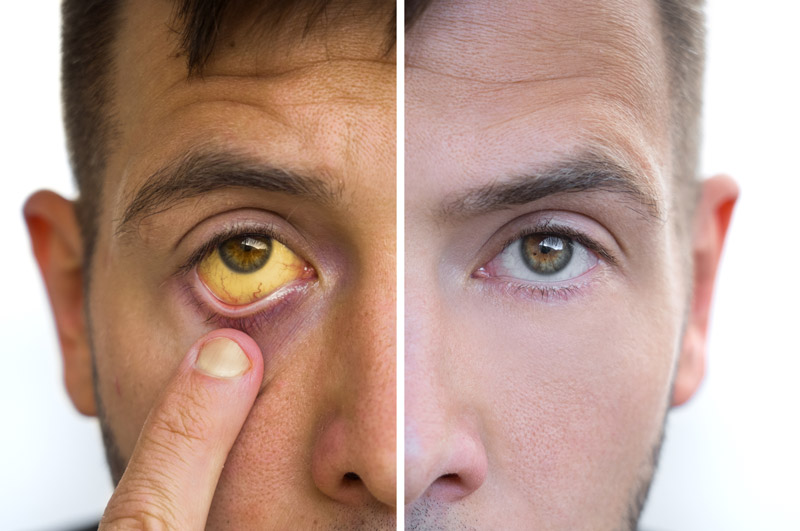
Jaundice Not Going Away? What It Could Mean
A little yellowing that clears up in a week or two is usually nothing to worry about. Jaundice that lingers, worsens, or keeps returning is your body asking for a closer look.
Jaundice itself isn't a disease — it's a visible sign that bilirubin, a yellow pigment produced when red blood cells break down, is building up in your blood faster than your liver and bile ducts can clear it. Short bouts, often linked to a viral infection, typically resolve within one to three weeks as the liver recovers.
When jaundice persists well beyond that window, it usually means one part of this clearance pathway isn't working properly — and finding out which part is the key to treating it.
What's commonly behind jaundice that doesn't clear up on its own.
Viral or autoimmune hepatitis
An ongoing infection (hepatitis A, B, C, or E) or an autoimmune reaction can keep the liver inflamed well past the typical recovery window, slowing its ability to process bilirubin. This is one of the most common reasons jaundice lingers.
Bile duct blockage
Gallstones that migrate into the bile duct, scarring from past surgery, or — less commonly — a growth pressing on the duct can physically block bile from reaching the intestine. This often comes with dark urine, pale stools, and itching alongside the yellowing.
Chronic liver disease
Advanced fatty liver disease, long-term heavy alcohol use, or cirrhosis can reduce the liver's processing capacity to the point that bilirubin builds up steadily rather than as a one-off spike. Jaundice here tends to develop gradually and persist.
Excess red blood cell breakdown (haemolysis)
Certain blood disorders or reactions cause red blood cells to break down faster than normal, producing more bilirubin than even a healthy liver can keep up with. This is less common in adults but worth ruling out with a blood test.
Persistent jaundice should always be evaluated, but some accompanying symptoms mean you shouldn't wait for a routine appointment:
- Dark urine and pale, clay-coloured stools
- Severe abdominal pain or a swollen, tender belly
- High fever or shaking chills
- Confusion, drowsiness, or unusual behaviour
- Easy bruising or bleeding
A liver function test (LFT) with bilirubin fractionation is usually the first step — it shows whether the issue sits before, within, or after the liver. From there, an abdominal ultrasound checks for bile duct blockages or structural changes, and a hepatitis panel or FibroScan may follow depending on what the initial results suggest.
The goal isn't just to treat the yellowing — it's to identify and address whatever is stopping bilirubin from clearing normally, since the jaundice itself is only the visible part of the picture.
How long does jaundice normally take to go away?
Can jaundice come back after it seems to clear up?
Does dark urine or pale stools mean something serious?
What tests are used to find the cause of persistent jaundice?
Jaundice that won't go away?
Don't wait it out — a simple blood test can often point to the cause. Get evaluated by our liver specialists.
Book a Liver Check-up