 Welcome Sathish Gastro & Liver Hospital In Mancherial


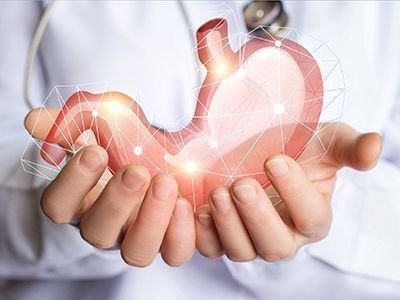
Gastric Cancer (Stomach Cancer):
Symptoms, Causes, Diagnosis & Treatment
A comprehensive, doctor-reviewed guide to understanding stomach cancer — from early warning signs to life-saving treatment options.

What Is Gastric Cancer?
Gastric cancer, commonly known as stomach cancer, is a malignancy that begins when abnormal cells grow uncontrollably in the lining of the stomach. It is the fifth most common cancer worldwide and one of the leading causes of cancer-related mortality.
The stomach is a J-shaped organ in the upper abdomen that breaks down food. Cancer can develop in any part of it — the cardia (upper portion near the esophagus), the body (middle section), or the antrum (lower part near the small intestine). The most common type is adenocarcinoma, which arises from the mucus-secreting cells lining the stomach.
Types of Gastric Cancer
- Adenocarcinoma — Accounts for ~95% of all stomach cancers; starts in glandular cells of the stomach lining.
- Gastrointestinal Stromal Tumors (GISTs) — Arise from connective tissue cells; may behave more benignly.
- Lymphoma — Cancer of the immune system cells within the stomach wall.
- Carcinoid Tumors — Slow-growing tumors that begin in hormone-producing cells.
- Squamous Cell Carcinoma — Rare type originating from squamous (flat) cells.
Symptoms of Stomach Cancer
Gastric cancer is often called a "silent disease" because early-stage symptoms can easily be mistaken for common digestive problems like acid reflux or gastritis. By the time noticeable symptoms appear, the disease may have already progressed. Knowing these warning signs can be life-saving.

Fig. 1 — The 10 key symptoms of gastric (stomach) cancer. Source: SprintMedical
Early Warning Signs
Persistent indigestion or heartburn
Nausea or frequent vomiting
Unexplained weight loss
Loss of appetite or early fullness
Persistent fatigue or weakness
Mild upper abdominal discomfort
Advanced Symptoms (Seek Immediate Attention)
- Trouble swallowing (dysphagia) — Difficulty or pain when swallowing food or liquid.
- Black or tarry stools — Indicates bleeding in the upper gastrointestinal tract.
- Vomiting blood — A serious red flag requiring emergency care.
- Severe abdominal bloating — Persistent swelling that does not resolve.
- Jaundice — Yellowing of skin or eyes if cancer spreads to the liver.
- Ascites — Fluid accumulation in the abdomen in advanced disease.
Causes & Risk Factors
While the exact cause of gastric cancer is not always identifiable, several well-established risk factors significantly increase a person's likelihood of developing it.
Primary Causes
1. Helicobacter pylori (H. pylori) Infection
This bacterium is the single most important risk factor for gastric cancer. H. pylori infects the stomach lining, causes chronic inflammation (gastritis), and over decades can lead to precancerous changes. It is classified as a Group 1 carcinogen by the WHO.
2. Diet & Lifestyle
- High intake of salty, smoked, or pickled foods — damages stomach lining
- Low consumption of fresh fruits and vegetables
- Smoking — doubles the risk of gastric cancer
- Chronic heavy alcohol consumption
- Obesity — particularly linked to gastric cardia cancer
3. Genetic & Family Factors
- First-degree relative (parent/sibling) with gastric cancer
- CDH1 gene mutation — associated with hereditary diffuse gastric cancer
- Lynch syndrome (hereditary non-polyposis colorectal cancer)
- Familial adenomatous polyposis (FAP)
4. Pre-existing Medical Conditions
- Chronic atrophic gastritis or intestinal metaplasia
- Gastric polyps (especially adenomatous polyps)
- Pernicious anaemia
- Previous partial gastrectomy
- GERD (gastroesophageal reflux disease)
Risk Factor Summary Table
| Risk Factor | Category | Relative Risk Increase | Modifiable? |
|---|---|---|---|
| H. pylori infection | Infectious | 3–6× | Yes (antibiotics) |
| Smoking | Lifestyle | 2× | Yes |
| High-salt diet | Dietary | 1.5–2× | Yes |
| Family history | Genetic | 2–3× | No |
| CDH1 mutation | Genetic | Up to 80% lifetime risk | No |
| Chronic atrophic gastritis | Medical | 3–18× | Partially |
| Obesity | Lifestyle | 1.5× | Yes |
| Alcohol (heavy) | Lifestyle | 1.3–1.5× | Yes |
Stages of Stomach Cancer
Staging helps doctors determine how far the cancer has spread and guides treatment planning. The TNM staging system (Tumor, Node, Metastasis) is the international standard. There are five main stages:

Fig. 2 — The stages of stomach cancer showing how the tumor invades progressively deeper layers.
Stage 0
Cancer confined to innermost stomach lining (mucosa) only. No lymph node involvement. Highly curable.
Stage I
Tumor invades submucosa or muscle layer. May involve 1–2 nearby lymph nodes. Good prognosis.
Stage II
Cancer reaches outer stomach wall or spreads to 3–6 lymph nodes. Surgery still potentially curative.
Stage III
Deep invasion with significant lymph node involvement or spread to nearby organs. Multimodal therapy required.
Stage IV
Distant metastasis to liver, lungs, peritoneum, or other organs. Focus shifts to palliative/systemic therapy.

Fig. 3 — Detailed illustration of gastric cancer lesion within the stomach. © Mayo Foundation for Medical Education and Research.
How Is Stomach Cancer Diagnosed?
Accurate diagnosis involves a combination of clinical assessment, endoscopic evaluation, imaging, and laboratory investigations. A gastroenterologist or oncologist will typically recommend one or more of the following:
Diagnostic Methods
🔬 Upper Gastrointestinal Endoscopy (Gastroscopy)
This is the gold standard diagnostic tool. A flexible camera (endoscope) is passed through the mouth into the stomach, allowing direct visualisation of the mucosal lining. Suspicious lesions are biopsied for histopathological analysis.
🩻 CT Scan (Computed Tomography)
A CT scan of the chest, abdomen, and pelvis helps assess the extent of local disease, lymph node involvement, and whether distant metastasis (especially to liver and lungs) is present.
📡 Endoscopic Ultrasound (EUS)
EUS combines endoscopy with ultrasound to evaluate the depth of tumour invasion into the stomach wall (T-staging) and assess perigastric lymph nodes — crucial for surgical planning.
☢️ PET-CT Scan
Positron emission tomography helps detect metabolically active cancer cells throughout the body, particularly useful for identifying occult metastases not visible on CT.
🧪 Blood Tests & Tumor Markers
- CEA (Carcinoembryonic Antigen) — elevated in some gastric cancers
- CA 19-9 — useful for monitoring treatment response
- CA 72-4 — most specific marker for gastric carcinoma
- H. pylori tests — breath test, stool antigen, or blood serology
- Full blood count — to check for anaemia from occult bleeding
🧬 Molecular/Genetic Testing
HER2 (human epidermal growth factor receptor 2) testing and PD-L1 expression analysis guide targeted therapy and immunotherapy decisions. Microsatellite instability (MSI) testing is also increasingly performed.
Treatment Options for Stomach Cancer
Treatment of gastric cancer depends on the stage at diagnosis, the patient's overall health, and the molecular characteristics of the tumour. A multidisciplinary team — including a gastroenterologist, surgical oncologist, medical oncologist, and radiation oncologist — is typically involved.
1. Surgery
Surgery remains the cornerstone of curative treatment for localised gastric cancer.
- Endoscopic Mucosal Resection (EMR) / ESD — For Stage 0 and early Stage I tumours confined to the mucosa.
- Subtotal (Partial) Gastrectomy — Removal of the cancer-bearing portion of the stomach with clear margins.
- Total Gastrectomy — Complete removal of the stomach; performed when the tumour is large or centrally located. The oesophagus is connected directly to the small intestine.
- D2 Lymphadenectomy — Extended lymph node dissection, recommended in specialised centres for improved staging and survival.
2. Chemotherapy
Chemotherapy is used in several settings:
- Perioperative chemotherapy (before and after surgery) — e.g., FLOT regimen (5-FU, leucovorin, oxaliplatin, docetaxel) — improves surgical outcomes in resectable Stage II/III disease.
- Adjuvant chemotherapy (after surgery) — Reduces recurrence risk.
- Palliative chemotherapy — In Stage IV disease to extend survival and manage symptoms.
3. Targeted Therapy
- Trastuzumab (Herceptin) — For HER2-positive advanced gastric cancer; combined with chemotherapy.
- Ramucirumab — An anti-VEGFR2 antibody used in second-line treatment.
- Zolbetuximab — A newer targeted agent for Claudin 18.2-positive tumours.
4. Immunotherapy
Immune checkpoint inhibitors have transformed advanced gastric cancer treatment:
- Nivolumab and Pembrolizumab — PD-1 inhibitors; approved in combination with chemotherapy for first-line treatment of advanced gastric cancer.
- MSI-H (microsatellite instability-high) tumours show particularly strong responses to immunotherapy.
5. Radiation Therapy
Radiotherapy is less commonly used in isolation but plays a role in:
- Chemoradiation as part of adjuvant treatment after surgery
- Palliative relief of bleeding, obstruction, or bone pain in advanced disease
6. Palliative & Supportive Care
For unresectable Stage IV disease, the focus shifts to quality of life. Options include:
- Stenting to relieve gastric outlet obstruction
- Nutritional support — enteral feeding, parenteral nutrition
- Pain management, anti-nausea medications
- Palliative bypass surgery where indicated
Treatment by Stage — Summary Table
| Stage | Primary Treatment | Additional Therapy | 5-Year Survival |
|---|---|---|---|
| Stage 0 | Endoscopic resection (EMR/ESD) | None | ~90–95% |
| Stage I | Surgery (subtotal/total gastrectomy) | Observation or adjuvant chemo | ~70–80% |
| Stage II | Surgery + perioperative chemotherapy | Adjuvant chemo ± radiation | ~45–55% |
| Stage III | Surgery (where possible) + chemo | Targeted therapy, immunotherapy | ~20–35% |
| Stage IV | Systemic therapy (chemo + IO) | Palliative / supportive care | ~5–7% |
Prevention & Lifestyle Tips
While not all cases are preventable, evidence-based lifestyle modifications and early detection strategies can substantially reduce your risk.
Evidence-Based Prevention Strategies
- Test & treat H. pylori — If diagnosed, a course of antibiotics + proton pump inhibitors can eradicate the bacteria and significantly reduce cancer risk.
- Eat a Mediterranean-style diet — Rich in fresh fruits, vegetables, whole grains, legumes, and olive oil. The antioxidants in this diet help protect the stomach lining.
- Reduce salt intake — Aim for less than 5g (1 teaspoon) of salt per day. Avoid highly salted, pickled, or smoked foods.
- Quit smoking — Smokers are twice as likely to develop gastric cancer. Cessation at any age reduces risk.
- Maintain a healthy body weight — Obesity, especially central obesity, is associated with gastric cardia cancer.
- Limit alcohol — Keep alcohol consumption to minimal levels; avoid binge drinking.
- Increase fruit and vegetable intake — Particularly foods rich in Vitamin C and beta-carotene.
- Regular endoscopy for high-risk individuals — Those with family history, H. pylori positivity, or atrophic gastritis should undergo surveillance.
Frequently Asked Questions (FAQs)
Here are answers to the most commonly asked questions about gastric cancer:
Concerned About Your Gastric Health?
Dr. Sathish and the team at Sathish Gastroliver specialise in the early detection, diagnosis, and comprehensive management of gastric cancer and other gastrointestinal conditions.
Book a Consultation →