 Welcome Sathish Gastro & Liver Hospital In Mancherial


Frequent Throat Burning, Chest Discomfort & Stomach Burning: What Your Body Is Telling You
Medically reviewed content style · Sathish Gastro & Liver Hospital, Mancherial
A burning throat that won't quit, a tight or burning feeling in the chest after meals, the unpleasant sensation of food or sour acid rising into the mouth, a stomach that feels like it's on fire, and bowel motions that seem to have a mind of their own — these symptoms are among the most common reasons people visit a gastroenterologist. Individually, each can feel confusing or alarming. Together, they very often point toward one underlying process: acid reflux, medically known as gastroesophageal reflux disease, or GERD. This article walks through what causes each of these symptoms, how they connect to one another, when they are simply a nuisance, and when they are a signal to get checked.
Quick Navigation
- What's Actually Happening Inside Your Digestive System
- Frequent Throat Burning: Why It Happens
- Chest Discomfort After Meals: Reflux or Something Else?
- Food or Acid Coming Back Into the Mouth
- Stomach Burning: Common Causes
- Irregular Bowel Motions and the Gut Connection
- Common Triggers That Make Symptoms Worse
- When These Symptoms Need Urgent Attention
- How Doctors Diagnose the Cause
- Managing and Reducing Symptoms
- When to See a Doctor
- Frequently Asked Questions
- Conclusion
What's Actually Happening Inside Your Digestive System
At the bottom of the food pipe, or esophagus, there is a ring of muscle called the lower esophageal sphincter. Its job is simple: open to let food pass into the stomach, then close tightly to keep stomach contents, including strong digestive acid, from moving back upward. When this valve weakens, relaxes too often, or is put under extra pressure, acid and sometimes food can flow backward, a process called reflux.
Depending on how far the acid travels and how sensitive the tissue is, this backward flow can irritate the lower food pipe, causing classic heartburn; the upper food pipe and throat, causing throat burning and hoarseness; or the mouth, causing a sour or bitter taste. When this happens regularly, at least twice a week, or causes noticeable irritation, it is classified as gastroesophageal reflux disease rather than the occasional acidity most people experience once in a while.
Frequent Throat Burning: Why It Happens
Throat burning that occurs often, especially after meals, when lying down, or first thing in the morning, is frequently caused by a form of reflux that reaches all the way up to the throat and voice box, sometimes called laryngopharyngeal reflux or silent reflux. It earns the name "silent" because many people with this pattern do not experience typical heartburn at all — the main clues are throat-based instead.
- A persistent burning or raw feeling in the throat
- A sensation of a lump in the throat that doesn't go away with swallowing
- Frequent throat clearing or a chronic dry cough
- Hoarseness, especially noticeable in the morning
- A sour or bitter taste at the back of the mouth
Because acid reaching the throat can also come from causes other than reflux, such as allergies, postnasal drip, or certain medications, a doctor will usually consider these alternatives too before settling on a reflux-related diagnosis.
Chest Discomfort After Meals: Reflux or Something Else?
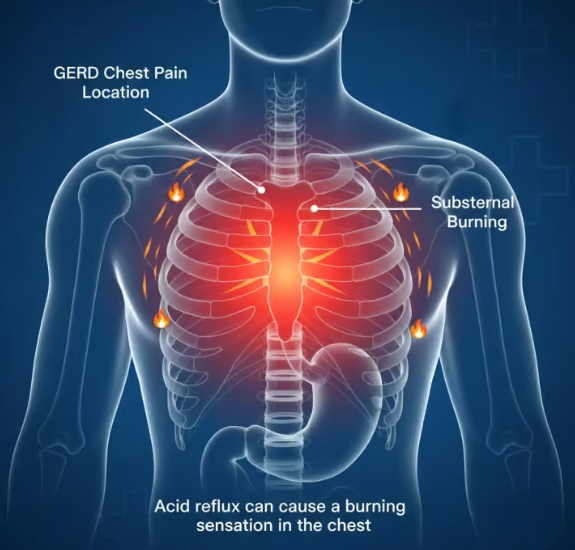
Burning, pressure, or a tight ache behind the breastbone that shows up after eating, particularly after large, fatty, or spicy meals, is one of the most recognizable reflux symptoms. It typically worsens when lying down soon after a meal or bending forward, and often eases somewhat with antacids or by staying upright.
| Feature | More Typical of Reflux | More Concerning for the Heart |
|---|---|---|
| Timing | After meals, when lying down or bending forward | During exertion, stress, or unpredictably at rest |
| Nature of pain | Burning, rising sensation behind breastbone | Pressure, tightness, squeezing, heaviness |
| Associated symptoms | Sour taste, regurgitation, throat burning | Sweating, breathlessness, pain in arm/jaw, nausea |
| Response to antacids | Often improves within minutes | Usually no significant relief |
This table is a general guide, not a diagnostic tool. Only a medical evaluation, sometimes including an ECG or cardiac workup, can reliably tell the two apart, particularly on a first occurrence.
Food or Acid Coming Back Into the Mouth
Regurgitation, the sensation of food or sour, acidic fluid rising back into the throat or mouth without the effort of vomiting, is one of the more specific signs of a weak lower esophageal sphincter. It tends to happen with:
- Large meals or eating too quickly
- Lying down within two to three hours of eating
- Bending forward or straining, such as lifting something heavy
- Carbonated drinks, alcohol, or high-fat meals
- An existing hiatal hernia, where part of the stomach sits above the diaphragm
Frequent regurgitation, especially at night, also raises the risk of the acid irritating the throat and airways, which can contribute to a chronic cough or a hoarse voice over time.
Stomach Burning: Common Causes
A burning sensation felt higher in the abdomen, rather than behind the breastbone, often points to irritation of the stomach lining itself rather than the food pipe. Common causes include:
| Cause | Typical Pattern |
|---|---|
| Gastritis (stomach lining inflammation) | Burning pain, often worse with spicy food or an empty stomach |
| H. pylori infection | Persistent burning, sometimes with bloating or nausea |
| Peptic ulcer | Gnawing or burning pain, may improve or worsen with food depending on ulcer location |
| Overuse of painkillers (NSAIDs) | Burning pain, increased risk of ulcers or bleeding |
| Functional dyspepsia | Burning or discomfort without a clear structural cause on testing |
Because several of these causes overlap in how they feel, ongoing stomach burning that doesn't settle with simple dietary changes is best evaluated rather than self-treated indefinitely with over-the-counter antacids.
Irregular Bowel Motions and the Gut Connection
Acid reflux primarily affects the upper digestive tract, but many people who experience throat burning, chest discomfort, and stomach burning also notice changes in their bowel habits, ranging from constipation to loose, urgent motions, or a pattern that alternates between the two. This connection can happen for a few reasons:
- Shared triggers such as stress, irregular eating times, and certain foods can affect both the upper and lower digestive tract together
- Slow stomach emptying can contribute to both reflux symptoms and bloating or irregular motions
- Some people have overlapping conditions, such as reflux alongside irritable bowel syndrome
- Certain medications used for acid reduction can occasionally affect bowel habits as a side effect
Irregular motions that persist for more than a few weeks, especially with blood, mucus, unintentional weight loss, or nighttime symptoms, should be evaluated as their own concern rather than assumed to simply be "part of acidity."
Common Triggers That Make Symptoms Worse
- Spicy, fried, or high-fat foods
- Caffeine, carbonated drinks, and alcohol
- Large meals or eating late at night
- Lying down soon after eating
- Excess body weight around the abdomen
- Smoking
- Certain medications, including some painkillers and blood pressure medicines
- Stress and irregular sleep patterns
When These Symptoms Need Urgent Attention
Seek prompt or emergency medical care if you experience:
- Severe chest pain, pressure, or squeezing, especially with sweating, breathlessness, or pain radiating to the arm, neck, or jaw
- Difficulty or pain swallowing food or liquids
- Vomiting blood or material that looks like coffee grounds
- Black, tarry, or bloody stools
- Unintentional weight loss alongside reflux or stomach symptoms
- Persistent vomiting or inability to keep food down
These signs can indicate a cardiac event, gastrointestinal bleeding, an ulcer, or another condition that needs urgent evaluation rather than home management.
How Doctors Diagnose the Cause
Evaluation usually starts with a detailed conversation about when symptoms occur, what triggers them, and what other conditions or medications may be involved. Depending on the findings, a doctor may recommend:
- Trial of acid-suppressing medication: Improvement with treatment often supports a reflux-related diagnosis.
- Upper endoscopy: A camera examination of the food pipe, stomach, and first part of the small intestine to check for inflammation, ulcers, or a hiatal hernia.
- H. pylori testing: Breath, stool, or biopsy-based tests to check for this common bacterial cause of gastritis and ulcers.
- 24-hour pH monitoring or manometry: Used in select cases to measure acid exposure and how well the food pipe muscles and valve are functioning.
- Blood tests and stool tests: Help evaluate for anemia, infection, or bleeding when irregular bowel motions or alarm symptoms are present.
Managing and Reducing Symptoms
Dietary and Meal Habits
Eating smaller, more frequent meals rather than large ones, avoiding food for two to three hours before lying down, and cutting back on known trigger foods such as spicy, fried, and highly acidic items can noticeably reduce throat burning, chest discomfort, and regurgitation.
Lifestyle Adjustments
Losing excess weight, avoiding tight clothing around the waist, elevating the head of the bed by a few inches, and quitting smoking all reduce pressure on the lower esophageal sphincter and lower the frequency of reflux episodes.
Medication
Depending on severity, doctors may recommend antacids for occasional relief, or acid-reducing medications such as proton pump inhibitors or H2 blockers for more frequent or persistent symptoms. These are generally most effective when combined with the lifestyle changes above, and long-term use should be guided by a doctor.
Addressing Bowel Symptoms Separately
If irregular motions persist alongside reflux symptoms, they usually need their own targeted evaluation, which may include dietary fiber adjustments, checking for infections, or assessing for a separate condition such as irritable bowel syndrome.
When to See a Doctor
Consider a gastroenterology consultation if:
- Throat burning, chest discomfort, or regurgitation occurs more than twice a week
- Symptoms disturb your sleep or daily activities
- Over-the-counter antacids give little or only brief relief
- You have persistent stomach burning, especially on an empty stomach
- Bowel habits have changed and stayed changed for more than a couple of weeks
- You notice hoarseness, a chronic cough, or a lump-in-throat feeling without another clear cause
Dr. Sathish Chander Gadigoppula and the team at Sathish Gastro & Liver Hospital, Mancherial, offer complete evaluation for acid reflux, GERD, gastritis, and related digestive concerns.
Visit Sathish Gastro & Liver HospitalFrequently Asked Questions
Why do I get a burning sensation in my throat so often?
Frequent throat burning is often caused by stomach acid traveling up the food pipe and reaching the throat, a condition sometimes called laryngopharyngeal reflux or silent reflux. Unlike typical heartburn, this type of reflux may not cause obvious chest pain, but instead produces throat irritation, a sour taste, hoarseness, or a constant urge to clear the throat, especially after meals or lying down.
Is chest discomfort after eating always related to the heart?
Not always. Chest discomfort after meals is commonly caused by acid reflux irritating the food pipe, which can feel like burning, pressure, or tightness behind the breastbone. However, because heart-related chest pain can feel similar, any new, severe, or exercise-related chest discomfort, especially with sweating, breathlessness, or pain spreading to the arm or jaw, needs urgent medical evaluation to rule out a cardiac cause first.
What does it mean when food or acid comes back into my mouth?
This is called regurgitation, and it happens when the valve between the food pipe and stomach, called the lower esophageal sphincter, does not close properly, allowing stomach contents to flow backward. It is a hallmark symptom of gastroesophageal reflux disease and tends to worsen after large meals, spicy or fatty foods, lying down soon after eating, or bending forward.
What causes a burning feeling in the stomach?
Stomach burning can result from excess acid production, gastritis, an H. pylori infection, overuse of painkillers, or a peptic ulcer. It can also occur alongside acid reflux when the stomach lining becomes irritated. If stomach burning is frequent, occurs on an empty stomach, or is accompanied by weight loss or dark stools, it should be evaluated rather than managed with over-the-counter antacids alone.
Can acid reflux cause irregular bowel motions?
Acid reflux itself mainly affects the upper digestive tract, but the conditions that contribute to it, such as slow digestion, certain medications, dietary triggers, and stress, can also disturb bowel habits. Some people with reflux also have a separate but overlapping condition, such as irritable bowel syndrome, that causes alternating constipation and loose motions. Persistent changes in bowel habits deserve their own evaluation.
How is acid reflux or GERD diagnosed?
Doctors often begin with a detailed symptom history and a trial of acid-suppressing medication. If symptoms are frequent, severe, or do not respond to initial treatment, further tests such as an upper endoscopy, 24-hour pH monitoring, or esophageal manometry may be recommended to assess the food pipe lining and how well the valve and muscles are functioning.
What lifestyle changes help reduce throat burning and acid reflux?
Helpful changes include eating smaller meals, avoiding food for two to three hours before lying down, reducing caffeine, alcohol, spicy and fatty foods, losing excess weight, avoiding tight clothing around the abdomen, elevating the head of the bed, and quitting smoking. These measures reduce how often stomach acid moves upward into the food pipe and throat.
When should I worry about acidity symptoms and see a doctor?
You should see a doctor if symptoms occur more than twice a week, disturb sleep, do not improve with basic dietary changes or over-the-counter antacids, or are accompanied by difficulty swallowing, unintended weight loss, vomiting blood, black or tarry stools, or persistent hoarseness. These can indicate a more serious underlying condition that needs prompt evaluation.
Can untreated acid reflux lead to serious complications?
Yes. Long-standing, untreated acid reflux can lead to inflammation and narrowing of the food pipe, ulcers, and a condition called Barrett's esophagus, where the lining of the food pipe changes in a way that slightly raises the risk of esophageal cancer over time. Regular medical follow-up is important for anyone with chronic reflux symptoms.
Are antacids enough to manage acid reflux long term?
Antacids can relieve occasional symptoms quickly, but they do not address the underlying cause of reflux and are not meant for long-term daily use without medical guidance. Frequent or persistent symptoms usually need a proper evaluation and a structured treatment plan, which may include stronger acid-reducing medication, lifestyle changes, or further testing.
Conclusion
Frequent throat burning, chest discomfort after meals, food or acid coming back into the mouth, stomach burning, and irregular bowel motions can all feel like separate, confusing problems, but they frequently trace back to a single underlying issue: acid reflux and its effects on the digestive tract. Recognizing the pattern is the first step. Simple changes in meal timing, food choices, and daily habits resolve mild cases for many people, while more frequent or severe symptoms deserve a proper medical evaluation to confirm the cause and rule out other conditions.
If these symptoms are a regular part of your week rather than an occasional inconvenience, it is worth getting evaluated rather than managing them indefinitely on your own.
This article is for general educational purposes and does not replace professional medical advice, diagnosis, or treatment. Always consult a qualified healthcare provider for persistent or severe symptoms. If you experience chest pain with sweating or breathlessness, vomiting blood, or black stools, seek emergency medical care immediately.