 Welcome Sathish Gastro & Liver Hospital In Mancherial


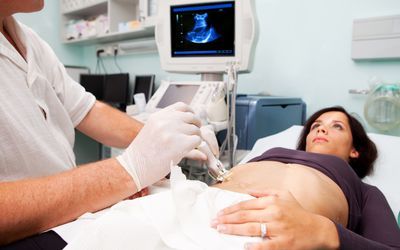
How Modern Liver Scans Help Detect Fibrosis Without Surgery
Medically reviewed content style · Sathish Gastro & Liver Hospital, Mancherial
For decades, a liver biopsy, meaning a needle inserted through the skin to remove a small piece of liver tissue, was the only reliable way to know how much scarring, or fibrosis, a person's liver had. Today, a range of imaging-based and blood-based tests can estimate liver fibrosis accurately without any needle, sedation, or hospital stay. This article explains how these modern liver scans work, how accurate they are, and who should consider getting tested.
Quick Navigation
- What Is Liver Fibrosis and Why It Matters
- Why Non-Invasive Testing Has Replaced Routine Biopsy
- Types of Non-Invasive Liver Fibrosis Tests
- How Elastography Actually Works
- Understanding Your Fibrosis Scan Results
- How Accurate Are These Scans?
- Who Should Get a Liver Fibrosis Scan
- Preparing for a Liver Elastography Scan
- When Liver Symptoms Need Urgent Attention
- When to See a Doctor
- Frequently Asked Questions
- Conclusion
What Is Liver Fibrosis and Why It Matters
Liver fibrosis is the buildup of scar tissue that occurs when the liver is repeatedly injured or inflamed over months or years. Common causes include fatty liver disease, chronic hepatitis B or C, long-term heavy alcohol use, and autoimmune liver conditions. In its early stages, fibrosis usually causes no symptoms at all, which is exactly why detecting it early through testing, rather than waiting for symptoms, is so important.
If fibrosis continues to build without treatment, it can progress to cirrhosis, a more advanced and largely permanent form of scarring that increases the risk of liver failure, internal bleeding, and liver cancer. The encouraging part is that early to moderate fibrosis can often be slowed, stopped, or even partly reversed once the underlying cause is treated, which makes accurate, repeatable testing extremely valuable.
Why Non-Invasive Testing Has Replaced Routine Biopsy
A liver biopsy can certainly diagnose fibrosis, but it carries real drawbacks: it is invasive, can cause pain or bleeding, requires a small recovery period, and only samples a tiny fraction of the liver, which can occasionally miss patchy areas of scarring. It is also impractical to repeat every few months to track whether treatment is working.
Non-invasive tests solve most of these problems. They can be repeated easily, carry no procedural risk, and in the case of imaging-based tests, assess a much larger portion of the liver than a biopsy needle ever could. As a result, professional liver societies now generally recommend non-invasive testing as the first step for most people, reserving biopsy for cases where results are unclear, conflicting, or when a specific diagnosis cannot be confirmed another way.
Types of Non-Invasive Liver Fibrosis Tests
Several different technologies are used today, each with its own strengths. They generally fall into imaging-based elastography and blood-based scoring systems.
| Test | How It Works | Typical Use |
|---|---|---|
| FibroScan (transient elastography) | A probe on the skin sends a gentle vibration through the liver and measures its speed | First-line screening and monitoring in clinics |
| Shear wave elastography | Built into standard ultrasound machines; measures wave speed through liver tissue | Combined with a routine abdominal ultrasound |
| MRI elastography (MRE) | Uses MRI to create a detailed stiffness map of the entire liver | Higher-accuracy testing, especially in obesity or ascites |
| FIB-4 score | Calculated from age, AST, ALT, and platelet count | Simple blood-based first pass to flag risk |
| APRI score | Calculated from AST and platelet count | Alternative blood-based screening tool |
| Enhanced Liver Fibrosis (ELF) test | Measures specific blood markers linked to scar tissue formation | Additional confirmation alongside elastography |
How Elastography Actually Works
The core idea behind elastography is simple: scarred, fibrotic liver tissue is stiffer than healthy liver tissue, in much the same way scar tissue on skin feels firmer than the skin around it. Elastography machines measure this stiffness indirectly by tracking how fast a small mechanical vibration or sound wave travels through the liver. Waves travel faster through stiffer tissue and slower through softer, healthier tissue.
- Probe placement: A handheld probe is placed on the skin over the right side of the abdomen, roughly where the liver sits beneath the ribs.
- Wave generation: The probe sends a brief, painless vibration or sound pulse into the liver tissue.
- Speed measurement: The machine measures how quickly this wave travels through the liver and converts that speed into a stiffness value.
- Multiple readings: Several measurements, often around ten, are taken and averaged to produce a reliable final result.
- Result and interpretation: The stiffness value, usually in kilopascals, is matched to an estimated fibrosis stage based on established cutoff ranges.
MRI elastography works on a similar underlying principle but uses a special MRI attachment to send vibrations into the body, then maps stiffness across the entire liver rather than a few sample points, which is part of why it tends to be slightly more precise, particularly in more complex cases.
Understanding Your Fibrosis Scan Results
| Fibrosis Stage | Description | Approximate Stiffness Range* |
|---|---|---|
| F0-F1 | No to minimal scarring | Below 7 kPa |
| F2 | Moderate scarring | 7 to 9 kPa |
| F3 | Advanced (severe) scarring | 9 to 12 kPa |
| F4 | Cirrhosis | Above 12 kPa |
*Exact cutoff values vary somewhat depending on the underlying liver disease and the specific device used; your doctor will interpret your number in that context rather than using a single universal cutoff.
Most FibroScan reports also include a separate liver fat score, called CAP (controlled attenuation parameter), which estimates the amount of fat in the liver independently of stiffness. Together, these two numbers give a fuller picture: how much fat is present and how much scarring has developed as a result.
How Accurate Are These Scans?
Non-invasive fibrosis tests are generally very good at identifying the two ends of the spectrum: little to no fibrosis, and advanced fibrosis or cirrhosis. They are somewhat less precise at telling the difference between adjacent middle stages, such as F1 versus F2, where results can occasionally overlap.
- FibroScan: Performs very well for detecting significant fibrosis and cirrhosis, with accuracy that approaches biopsy for these higher stages.
- MRI elastography: Slightly more accurate overall and more reliable in people with obesity or fluid in the abdomen, where FibroScan readings can be harder to obtain.
- Blood-based scores (FIB-4, APRI): Useful as a quick first-pass filter to identify who needs further imaging, but less precise on their own than elastography.
Because no single test is perfect, doctors often combine a blood-based score with an elastography result for the most reliable overall picture, reserving biopsy for situations where these tools still leave real uncertainty.
Who Should Get a Liver Fibrosis Scan
| Risk Factor | Why Testing Is Recommended |
|---|---|
| Fatty liver seen on ultrasound | To check whether fat has progressed to inflammation or scarring |
| Obesity or type 2 diabetes | Both strongly increase the risk of fatty liver-related fibrosis |
| Chronic hepatitis B or C | To assess existing liver damage and guide antiviral treatment decisions |
| Regular heavy alcohol use | To detect alcohol-related liver scarring before symptoms appear |
| Persistently elevated liver enzymes | To clarify whether ongoing liver injury has caused scarring |
| Known liver disease under treatment | To track whether treatment or lifestyle changes are working over time |
Preparing for a Liver Elastography Scan
Preparation for FibroScan and similar elastography tests is minimal, which is part of what makes them convenient for regular monitoring.
- Fasting for about 2 to 3 hours beforehand is often recommended, since eating can temporarily raise blood flow to the liver
- Loose clothing that allows easy access to the right side of the abdomen is helpful
- No sedation, injections, or driving restrictions are needed afterward
- The scan itself typically takes 10 to 15 minutes, and results are often available the same day
- People with a pacemaker, pregnancy, or significant abdominal fluid should mention this beforehand, as it may affect which test is most suitable
When Liver Symptoms Need Urgent Attention
Seek prompt medical care if you have known or suspected liver disease and develop:
- Yellowing of the eyes or skin (jaundice)
- Sudden swelling of the abdomen or legs
- Vomiting blood or passing black, tarry stools
- Confusion, drowsiness, or difficulty staying alert
- Severe abdominal pain with fever
These signs can indicate advanced liver disease or a complication that needs immediate evaluation, rather than waiting for a scheduled scan or appointment.
When to See a Doctor
Consider speaking with a doctor about a non-invasive liver fibrosis test if you have any of the following:
- A fatty liver finding on a routine ultrasound
- Obesity, type 2 diabetes, or a metabolic syndrome diagnosis
- Chronic hepatitis B or C infection
- A history of regular heavy alcohol use
- Liver enzymes that remain elevated on repeat blood tests
- A need to monitor known liver disease over time
Dr. Sathish Chander Gadigoppula and the team at Sathish Gastro & Liver Hospital, Mancherial, offer non-invasive liver fibrosis testing, ultrasound, and comprehensive liver disease evaluation.
Visit Sathish Gastro & Liver HospitalFrequently Asked Questions
Can liver fibrosis be detected without a biopsy?
Yes. Non-invasive tools such as FibroScan (transient elastography), shear wave elastography, and MRI elastography can estimate liver stiffness, which closely correlates with the amount of scarring in the liver. Blood-based scores like FIB-4 and APRI can also flag a higher likelihood of fibrosis. A biopsy is now usually reserved for cases where these non-invasive results are unclear or conflicting.
How accurate is FibroScan compared to a liver biopsy?
FibroScan is highly accurate for detecting significant fibrosis and cirrhosis, with performance that approaches liver biopsy for these stages in most studies. It is somewhat less precise at distinguishing between the earliest, mildest stages of fibrosis, where a biopsy or additional testing may still add useful information in select cases.
Does a FibroScan hurt?
No. FibroScan is painless and feels similar to a regular ultrasound, with a brief vibration sensation on the skin over the liver. There is no needle, no sedation, and no recovery time needed, and most people return to normal activities immediately afterward.
How long does a liver elastography scan take?
A typical FibroScan appointment takes about 10 to 15 minutes, including several individual measurements taken over the liver to get a reliable average reading. MRI elastography takes somewhat longer, often 20 to 30 minutes, since it is usually done alongside a broader MRI of the abdomen.
What do FibroScan results mean?
FibroScan gives a liver stiffness measurement in kilopascals, which is then interpreted on a scale from F0, meaning no significant fibrosis, to F4, meaning cirrhosis. Many machines also give a separate score for liver fat. Higher stiffness values generally indicate more advanced scarring, though the exact cutoff values can vary slightly depending on the underlying liver disease.
Who should get a non-invasive liver fibrosis test?
People with risk factors for liver disease are good candidates, including those with fatty liver on ultrasound, obesity, type 2 diabetes, chronic hepatitis B or C, regular heavy alcohol use, or persistently elevated liver enzymes. Doctors often use these scans both to diagnose fibrosis and to track whether treatment or lifestyle changes are working over time.
Can fibrosis go down after a scan shows scarring?
Early to moderate fibrosis can often improve or partially reverse once the underlying cause is treated, such as through weight loss, antiviral treatment for hepatitis, or stopping alcohol use. Repeat elastography scans over months to years are commonly used to track this kind of improvement without needing another biopsy.
Is MRI elastography better than FibroScan?
MRI elastography tends to be slightly more accurate overall and works well even in people with obesity or a lot of fluid in the abdomen, situations where FibroScan can sometimes struggle to get a reliable reading. However, it is more expensive, takes longer, and is less widely available, so FibroScan remains the more commonly used first-line test.
Can a fatty liver affect fibrosis scan results?
Yes, a large amount of fat in the liver can sometimes make stiffness readings less reliable or slightly higher than the true amount of fibrosis. Experienced centers account for this using calibrated probes and by interpreting liver stiffness results alongside the liver fat score and the person's overall clinical picture.
Do I need to fast before a liver elastography test?
Many centers recommend fasting for about 2 to 3 hours before a FibroScan, since eating can temporarily increase blood flow to the liver and affect stiffness readings. Your doctor or the testing center will typically give specific preparation instructions when the scan is scheduled.
Conclusion
Detecting liver fibrosis no longer has to mean a needle biopsy for most people. Tools like FibroScan, shear wave elastography, and MRI elastography, often paired with simple blood-based scores, can now estimate liver scarring quickly, painlessly, and accurately enough to guide most treatment decisions. Because these tests are easy to repeat, they also make it possible to track real progress over time, whether that means confirming that weight loss and treatment are working or catching early warning signs before they become serious.
If you have risk factors for liver disease or have been told you have a fatty liver, ask your doctor whether a non-invasive fibrosis scan is right for you. Early detection remains one of the most effective ways to protect long-term liver health.
This article is for general educational purposes and does not replace professional medical advice, diagnosis, or treatment. Always consult a qualified healthcare provider to determine which liver tests are appropriate for your situation. If you are experiencing severe symptoms, seek emergency medical care immediately.