 Welcome Sathish Gastro & Liver Hospital In Mancherial


Liver FibroScan Test: What It Is, How It Works & Why It Matters
A painless, 5-minute scan that tells you how stiff — and how fatty — your liver really is, without a single needle.
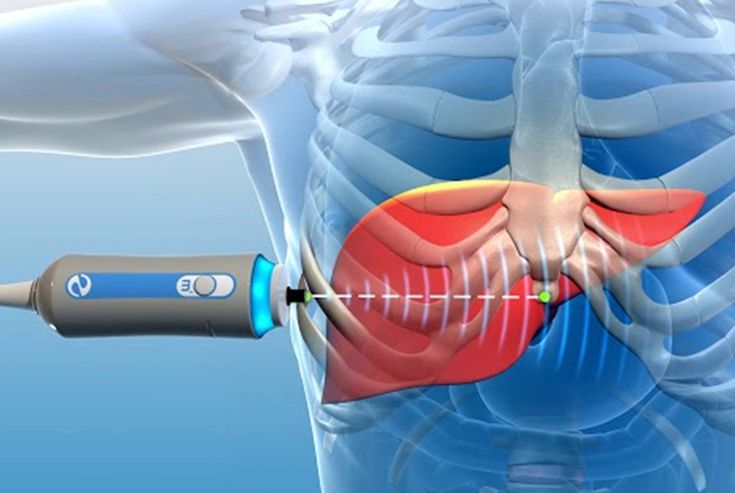
How a FibroScan works: a painless probe sends a gentle vibration through the liver and measures how fast it travels — the faster it moves, the stiffer (and more scarred) the liver.
What Is a FibroScan?
A FibroScan (transient elastography) is a specialised ultrasound-based device used to measure two things at once — liver stiffness (a marker of fibrosis or scarring) and liver fat content (a marker of fatty liver disease, also called CAP — Controlled Attenuation Parameter). It is completely non-invasive, painless, and gives an instant, numerical result on the same visit.
For years, a liver biopsy was the only way to check the extent of liver scarring. FibroScan has changed that — it is now the first-line test recommended for people with fatty liver disease, chronic hepatitis B or C, and long-term alcohol use, before biopsy is even considered.
Why Is a FibroScan Done?
The liver has almost no nerve endings, so it rarely causes pain until damage is advanced. A FibroScan detects silent scarring early — often years before symptoms, blood tests, or a routine ultrasound would pick it up.
Detects fibrosis early
- Measures scar tissue build-up
- Stages disease from F0 to F4
- Tracks change over time
Measures fatty liver
- CAP score for fat content
- Grades mild to severe steatosis
- Useful for NAFLD/MASLD follow-up
Avoids unnecessary biopsy
- No admission needed
- No bleeding or infection risk
- Can be repeated safely
FibroScan can tell these three liver states apart — healthy, fatty, and scarred (fibrotic/cirrhotic) — using a single painless scan.
Who Should Get a FibroScan?
- Anyone diagnosed with fatty liver disease on ultrasound
- People with chronic Hepatitis B or Hepatitis C
- Individuals with a long history of regular alcohol consumption
- People with diabetes, obesity, or high cholesterol (metabolic risk factors)
- Patients with abnormal liver function test (LFT) results
- Anyone with a family history of liver cirrhosis or liver cancer
How to Prepare for the Test
What Happens During the Test?
- Step 1: You lie on your back with your right arm raised behind your head.
- Step 2: A small probe is placed on the skin over the right side of your ribcage, over the liver.
- Step 3: The probe sends a gentle, painless vibration into the liver and measures how fast it travels using ultrasound.
- Step 4: Ten separate readings are taken and averaged for accuracy.
- Step 5: Results — liver stiffness in kPa and fat percentage (CAP in dB/m) — are available immediately.
The full FibroScan journey — from lying down to reading your result — takes under 10 minutes.
Understanding Your FibroScan Results
Liver stiffness is reported in kilopascals (kPa). Higher numbers mean more scarring (fibrosis). Your doctor will match your reading to a fibrosis stage:
| Stage | Liver Stiffness (kPa) | What It Means |
|---|---|---|
| F0 – F1 | < 7.0 kPa | No or minimal fibrosis — healthy liver architecture |
| F2 | 7.0 – 9.0 kPa | Moderate fibrosis — lifestyle changes strongly advised |
| F3 | 9.0 – 12.0 kPa | Advanced fibrosis — close specialist monitoring needed |
| F4 | > 12.0 kPa | Cirrhosis — significant scarring, requires active management |
The CAP score (measured in dB/m) reflects how much fat is present in the liver:
| CAP Score | Fat Grade |
|---|---|
| < 238 dB/m | No significant fat (S0) |
| 238 – 260 dB/m | Mild fatty liver (S1) |
| 260 – 290 dB/m | Moderate fatty liver (S2) |
| > 290 dB/m | Severe fatty liver (S3) |
FibroScan vs Liver Biopsy
| Feature | FibroScan | Liver Biopsy |
|---|---|---|
| Pain | Painless | Requires local anaesthesia |
| Duration | 5–10 minutes | 30+ minutes, plus recovery |
| Risk | None | Small risk of bleeding/infection |
| Admission | Not required | Often required for observation |
| Results | Instant | Takes several days |
| Repeatable | Yes, anytime | Not recommended frequently |
Side by side, it's easy to see why FibroScan has become the preferred first step over biopsy for most patients.
When Should You Get Tested?
Don't wait for symptoms — by the time jaundice, swelling, or fatigue appear, liver damage may already be advanced. Consider a FibroScan if you:
- Have been told you have a "fatty liver" on ultrasound
- Are living with diabetes, obesity, or high cholesterol
- Consume alcohol regularly
- Have Hepatitis B or C
- Have a family history of liver disease
Frequently Asked Questions
Is a FibroScan painful?
No. Most patients feel only a light vibration or a gentle thump on the skin, similar to a small tap. There is no cutting, no needles, and no anaesthesia involved.
How long does a FibroScan take?
The scan itself takes about 5 to 10 minutes. With registration and consultation, the entire visit is usually under 30 minutes.
Do I need to fast before a FibroScan?
Yes, a light 3-hour fast is generally recommended, mainly to improve the accuracy of the fat (CAP) measurement.
Can FibroScan replace a liver biopsy completely?
In most cases, yes — it has largely replaced biopsy for routine fibrosis monitoring. However, a biopsy may still occasionally be needed when results are unclear or when other liver conditions need to be ruled out.
How often should I repeat a FibroScan?
This depends on your baseline result and risk factors. Your liver specialist may suggest repeating it every 6 to 12 months to track progress or response to treatment.
Consultant Gastroenterologist & Liver Specialist, Sathish Gastro & Liver Hospital, Mancherial, Telangana
Worried About Your Liver Health?
A simple, painless FibroScan can tell you exactly where your liver stands. Get tested at Sathish Gastro & Liver Hospital, Mancherial.